Published: Health Insights | 8 min read
You're Not Losing Your Mind at 39. Your Doctor is Missing the Pattern.
Why "normal" lab results mean nothing when your estrogen swings 600% in 48 hours
By Sarah Mitchell, Health Research Writer

I sat in my car outside the doctor's office for twenty minutes before I could drive home.
Not because I was relieved. Because I was furious.
"Your labs are normal. Everything looks fine. Maybe try yoga for the stress."
This was the third doctor in eight months. The third time I'd been told my hormones were "fine" while I felt like I was actively dying.
The 3am wake-ups that left me lying in the dark until my alarm went off at 6:47am. The rage that came out of nowhere when my husband chewed too loud at dinner. The brain fog so thick I stood in front of the coffee maker for five minutes, unable to remember how to make coffee.
All normal, apparently.
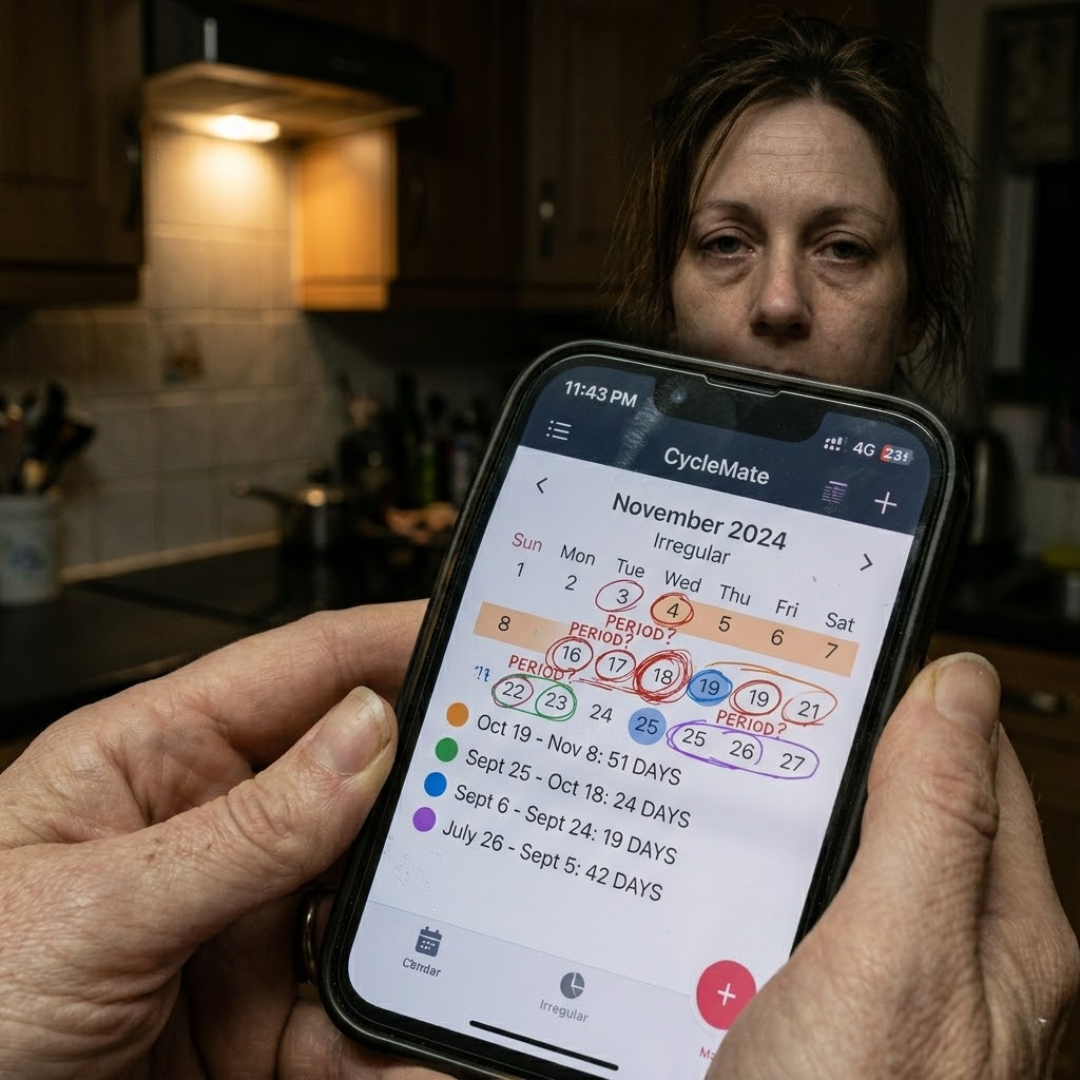
What Your Doctor Isn't Telling You About "Normal" Labs
Here's what nobody explained to me until I'd spent $2,847 on appointments and tests:
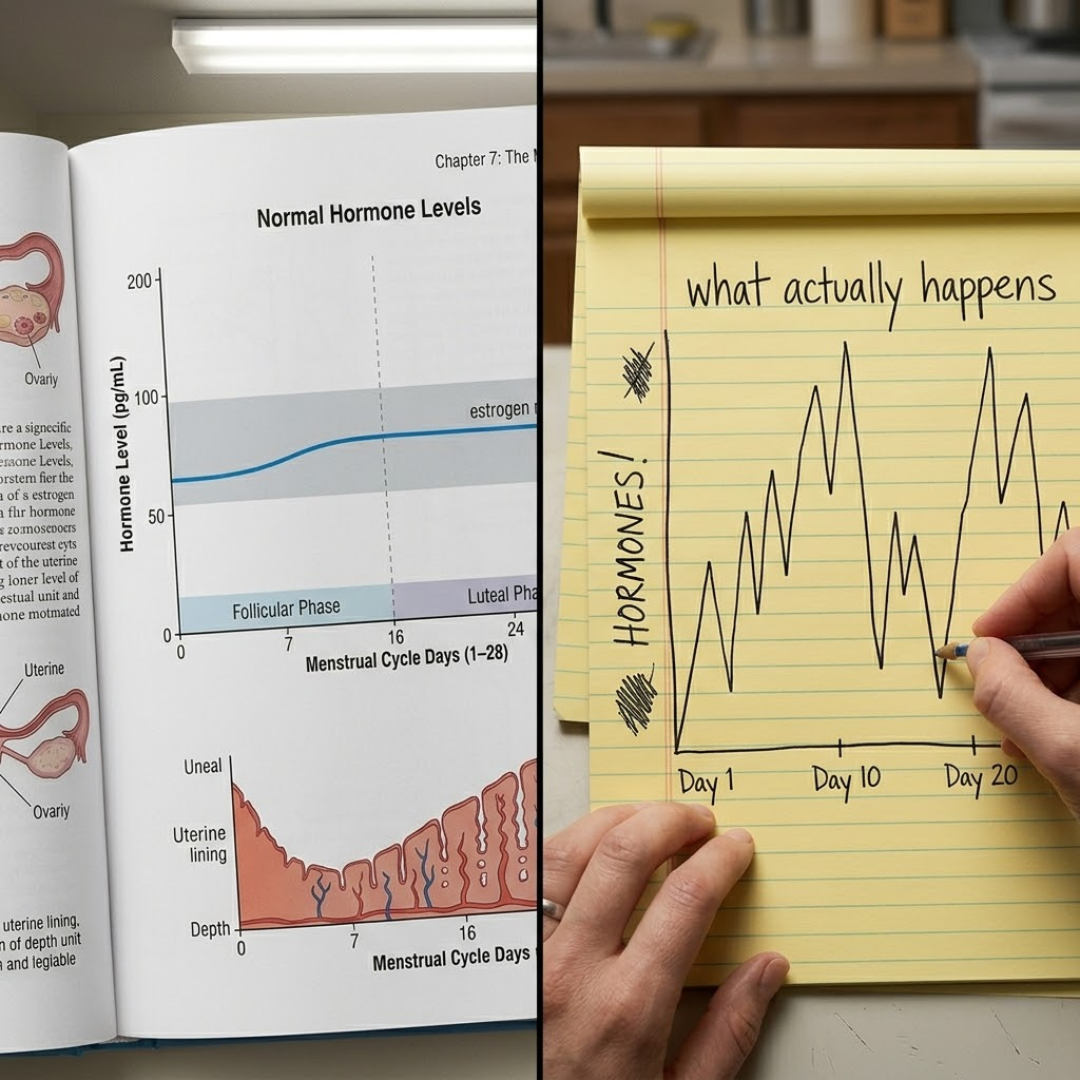
Blood work shows your hormone levels at one single moment. One hour. One snapshot.
But perimenopause isn't a snapshot. It's a rollercoaster.
Your estrogen can swing from 200 pg/mL on Monday to 40 pg/mL on Wednesday. That's not a typo. Research from the SWAN study tracked 3,302 women through perimenopause and found estrogen fluctuations of 400% to 600% within 48 to 72 hours were completely normal during this transition.
So when your doctor tested you on Tuesday at 9am and said "your estrogen is normal," they weren't lying. It was normal. At 9am. On Tuesday.
By Thursday at 3am when you woke up drenched in sweat with your heart racing, your estrogen had crashed. But nobody was testing you then.
Why You're Not "Too Young" at 35, 36, 38, 39
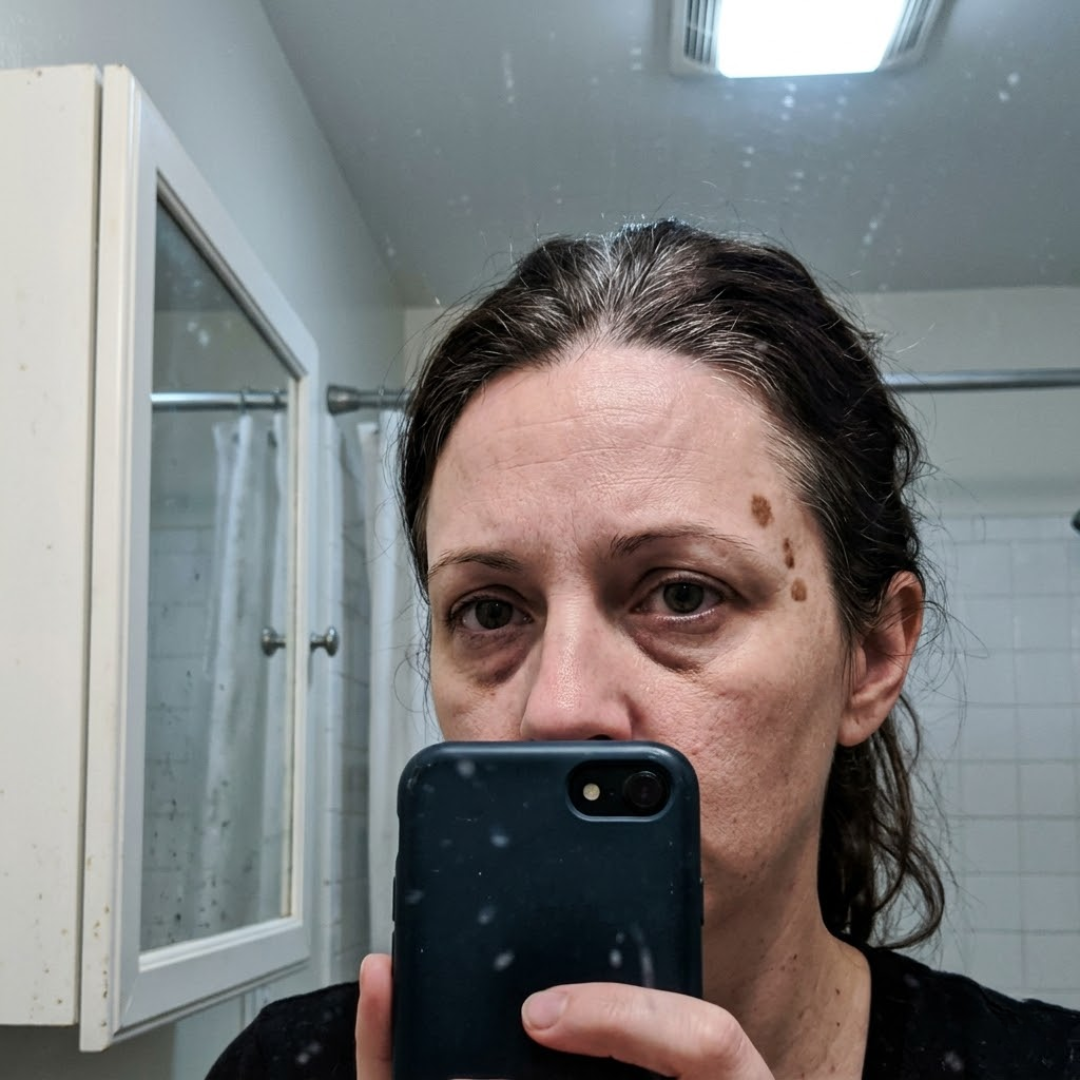
I was 39 when my symptoms started.
Every doctor told me I was too young. "Perimenopause starts in your mid-40s," they'd say, reading from whatever they learned in medical school in 1997.
The research says otherwise.
A 2020 study published in Menopause found that 8% of women enter perimenopause before age 40. But here's the part that made me want to scream: the average woman experiences symptoms for 4.6 years before her cycles become obviously irregular enough for doctors to "believe" her.
Four and a half years of being told you're fine.
Four and a half years of thinking you're losing your mind.
The Pattern Your Doctor Missed
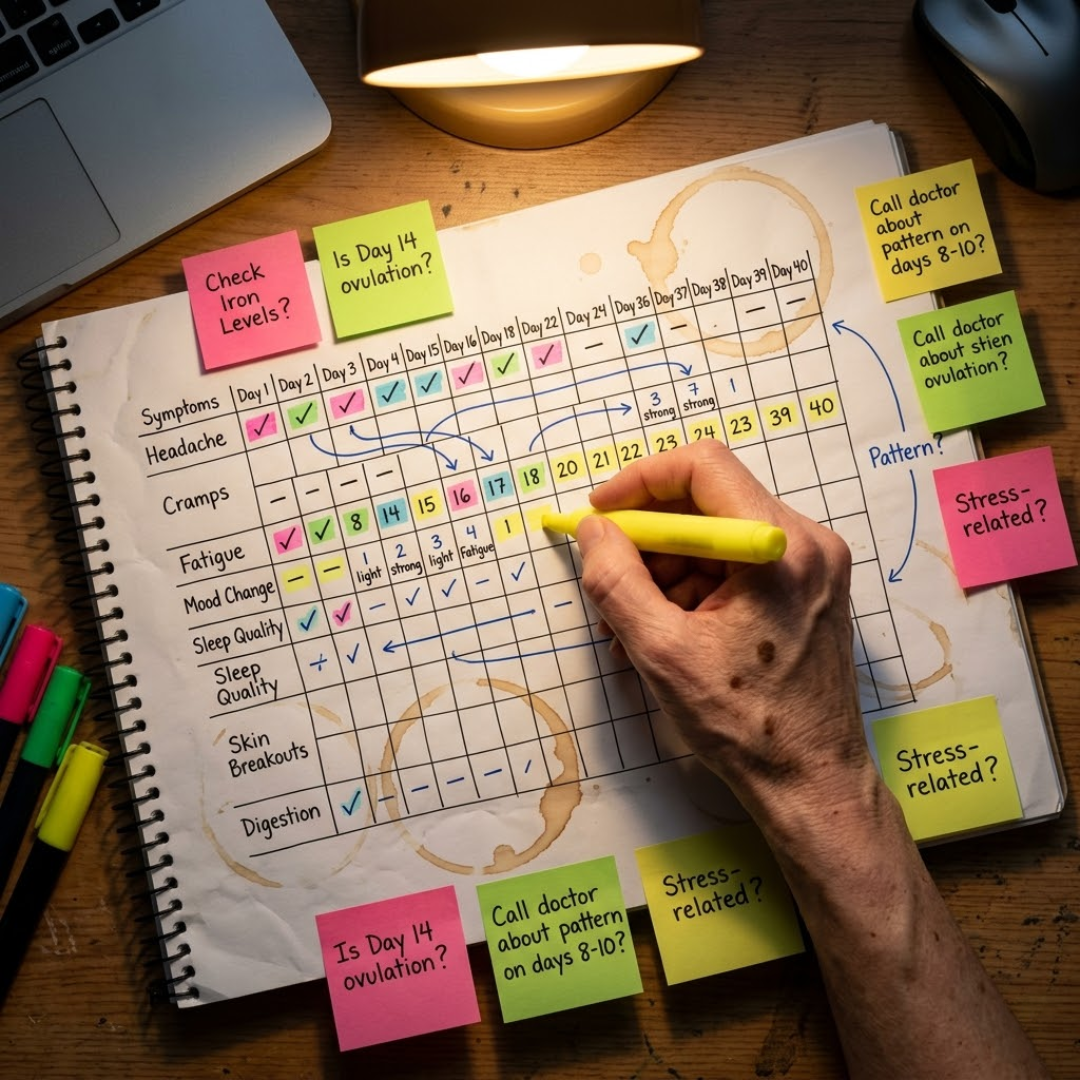
Looking back at my symptom tracker, I finally saw it.
The rage always hit 3 to 5 days before my period. The insomnia spiked mid-cycle. The brain fog was worst in the luteal phase. The 3am wake-ups happened like clockwork when my estrogen dropped.
But I didn't see the pattern because nobody told me to look for it.
My doctor saw:
Anxiety (offered Lexapro)
Insomnia (offered Ambien)
Irregular periods (offered birth control)
Brain fog (ordered thyroid panel)
They treated each symptom like a separate problem.
They never connected the dots.
What Nobody Told Me About Why Supplements Don't Work
I tried everything.
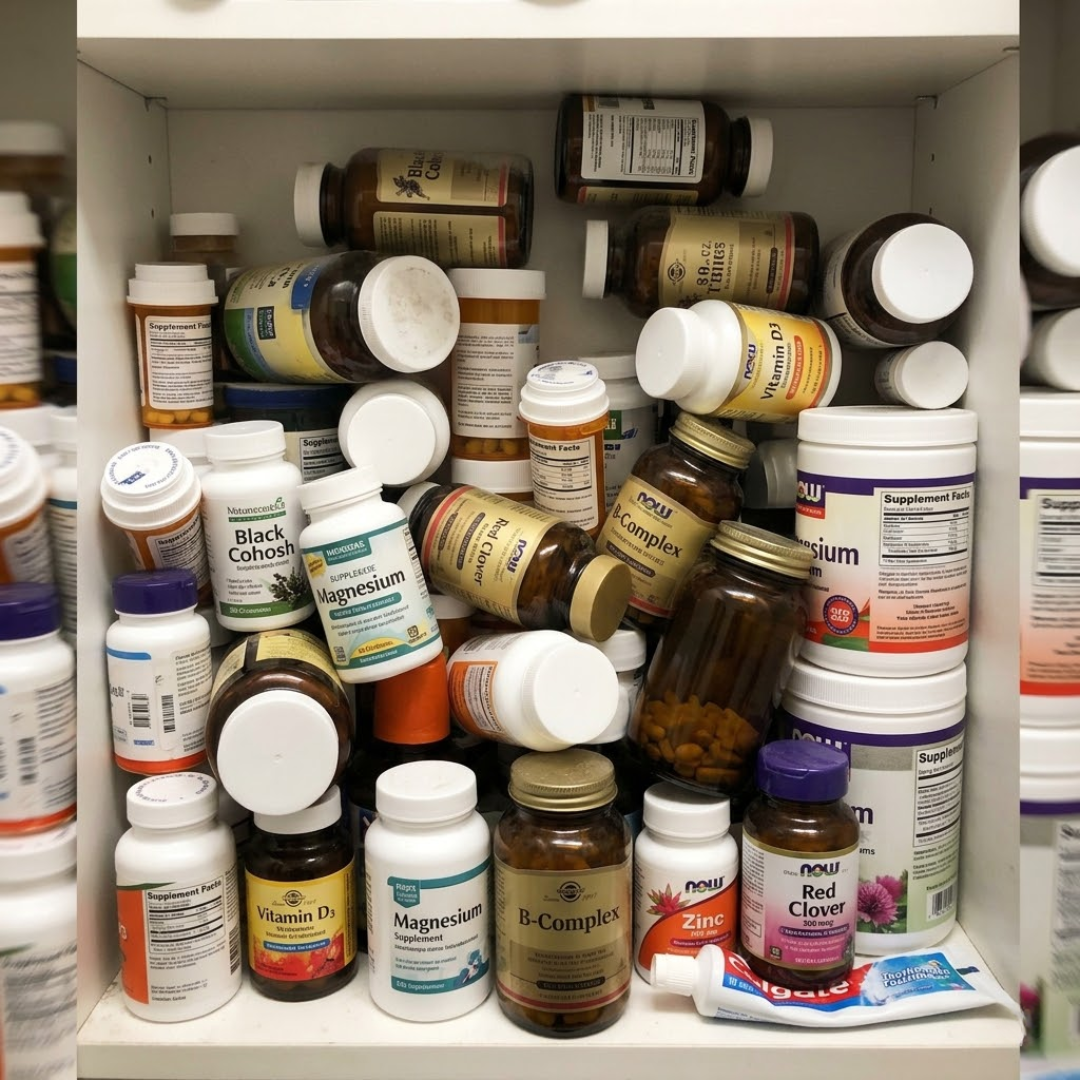
Black cohosh. Red clover. Dong quai. Maca root. B-complex. Magnesium. Ashwagandha.
My bathroom cabinet looked like a GNC exploded.
Nothing worked. Or things would work for three weeks, then stop. Or I'd feel worse.
Here's why:
Most perimenopause supplements are designed to "balance hormones" as if your hormones are static and just need to be leveled out.
But your hormones aren't static in perimenopause. They're swinging wildly. Treating swinging hormones with static supplementation is like trying to stabilize a boat in a storm by adding more weight to one side.
What Actually Helped (And Why It's Different)
I found Dr. Laura Chen's research almost by accident. A Reddit post at 2am led me to a study on adaptive hormone support.
The concept was simple but nobody talks about it: instead of trying to force your hormones into a static "balanced" state, you support your body's ability to adapt to the fluctuations.
Three mechanisms matter:
Mechanism 1
Cortisol buffering
When your estrogen crashes, your cortisol spikes to compensate. This is why you wake up at 3am wired and anxious. Supporting healthy cortisol response prevents the crash-and-spike cycle.
Mechanism 2
Neurotransmitter stability
Estrogen directly impacts serotonin and dopamine production. When estrogen swings, your mood swings. But if you support the neurotransmitter production pathways independently of estrogen, you create stability even when hormones fluctuate.
Mechanism 3
Cellular energy production
The exhaustion isn't just "being tired." Your mitochondria (cellular energy factories) are estrogen-dependent. When estrogen drops, so does cellular energy. This is why coffee stops working.

The Women Who Finally Feel Like Themselves Again
"I thought I was going crazy. My labs were 'normal' but I felt 86 years old at 42. Three weeks after starting adaptive support, I woke up at 6am without an alarm and actually had energy. I cried because I didn't know I could feel like myself again."
— Jennifer M., 42
"My doctor kept pushing antidepressants. I wasn't depressed. I was exhausted and my brain wouldn't work. The difference in my brain fog after supporting my cellular energy was like someone turned the lights back on."
— Patricia L., 38
"Five months of bleeding. Five. My gynecologist finally agreed to see me after I'd ruined $400 worth of clothes and bedding. Stabilizing the estrogen fluctuations instead of trying to 'balance' them changed everything."
— Rebecca T., 44
What Changed For Me
It's been four months.
I'm not going to tell you everything is perfect. I'm not going to say I never wake up at 3am or that my cycles are suddenly regular.
But I wake up at 3am maybe twice a month now instead of fourteen times. When I do wake up, I fall back asleep instead of lying there until dawn.
I made coffee this morning without standing in front of the machine in a fog.
My husband asked if I wanted to go to dinner with friends and I said yes without the immediate dread of having to be "on" around people.
I feel like myself 70% of the time instead of 5%.

If Your Doctor Said "Your Labs Are Normal"
You're not crazy.
You're not too young.
You're not imagining it.
Your hormones are fluctuating wildly and one blood test at 9am on a Tuesday cannot capture what's happening to your body over 24 hours, let alone 30 days.
The rage, the exhaustion, the 3am wake-ups, the brain fog, the feeling like you're watching someone else live your life — all of it is real.
And all of it is connected to estrogen fluctuations that standard testing completely misses.

The supplement I use is called RYVIVE™ Get Your Life Back Gummies — it's the only one I found that actually solves the core issue instead of trying to "balance" hormones statically.
I'm not affiliated with them. I don't get paid to share this. I'm just a woman who spent nine months being told she was fine while feeling like she was dying, and I don't want you to waste nine months like I did.